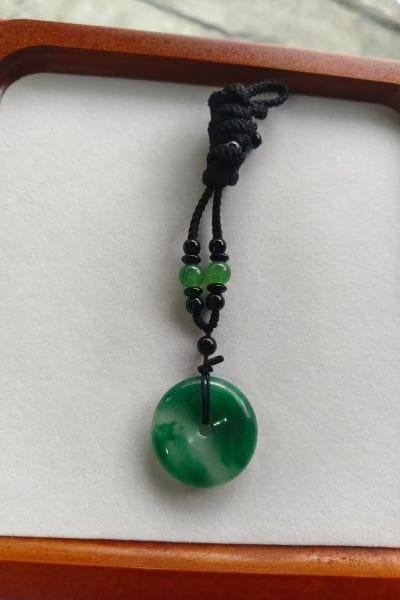
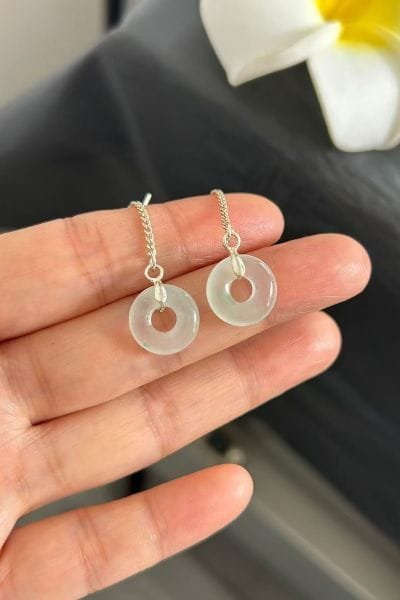
If you have browsed enough jade listings online, you start to notice a pattern. Most shops carry the same categories. Jadeite bangles from Myanmar. Nephrite carvings from Hetian. The colors blur together after a while. Then occasionally a piece shows up that looks different. The green is brighter, almost glassy. The price is lower than you would expect. The listing calls it Dulong jade. Most people scroll past it because the name is unfamiliar. That is a mistake.
Where Dulong Jade Actually Comes From
Dulong jade comes from the Dulong River valley in Gongshan County, Yunnan Province. This is deep in the Nujiang Lisu Autonomous Prefecture, tucked along the border between China and Myanmar. The Dulong River area was one of the last regions in China to get road access. The Dulong people have lived in these mountains for centuries, cut off from the outside world by terrain that makes modern infrastructure nearly impossible.
The jade itself is a quartzite jade. Its main mineral component is alpha-quartz, making up over 90 percent of the stone. The green color comes from trace amounts of chromium and iron embedded in the crystal structure during formation. In gemological terms, Dulong jade belongs to the aventurine quartz family. It often carries visible pyrite inclusions, tiny gold flecks scattered through the green body, which is one of the easiest ways to tell it apart from jadeite or glass imitations.
On the Mohs hardness scale, Dulong jade sits at 6.5 to 7. That puts it in the same range as jadeite, which also measures 6.5 to 7 according to the Gemological Institute of America. The difference is not about hardness. It is about structure. Jadeite has a fibrous interlocking crystal structure that gives it exceptional toughness. Dulong jade has a granular structure, which means it is hard enough to resist scratching but can be more brittle if struck sharply. For daily wear in pendants or earrings, this makes no practical difference. For a bangle that might hit a doorframe, jadeite has a slight edge.
How to Tell Dulong Jade from Jadeite
Buyers who are new to Dulong jade often worry about confusing it with jadeite. Here is what to look for.
First, check for pyrite inclusions. Natural Dulong jade frequently contains small gold or metallic flecks of pyrite. Jadeite rarely shows this feature. If you see tiny sparkles inside the green stone, that is a good sign you are looking at Dulong jade, not jadeite.
Second, look at the grain structure. Dulong jade has a visible granular texture under magnification. Jadeite has a fibrous, felted structure that looks more like woven fabric under a loupe. The difference is subtle but consistent.
Third, feel the weight. Jadeite has a specific gravity of about 3.3, while Dulong jade sits around 2.6 to 2.8. A same-sized piece of jadeite will feel noticeably heavier in the hand. This is not a precise test, but it helps when comparing pieces side by side.
Why Dulong Jade Is Worth Looking At
The case for Dulong jade is not that it is better than jadeite. It is not. Jadeite has centuries of cultural prestige and a more refined toughness. The case is that Dulong jade offers a combination of color, character, and value that jadeite cannot match at the same price point.
A high-quality Dulong jade pendant with vivid green color and good translucency might cost 80 to 200 dollars from a source supplier. A jadeite piece of similar visual quality would easily run three to five times that amount. For someone who wants the look of fine green jade without the investment grade price tag, Dulong jade fills that gap.
There is also the matter of supply. Mining in the Dulong River area is restricted by ecological protection policies. Annual output is limited, and high-grade material with strong color and translucency is a small fraction of that output. This scarcity does not guarantee future appreciation, but it does mean the supply is not elastic. New material does not flood the market when demand spikes.
What to Check Before You Buy
If you are shopping for Dulong jade for the first time, here are the things that matter.
Look for translucency. Hold the piece up to a light source. Better quality Dulong jade will let light pass through the edges, showing a glow from within. Opaque pieces are cheaper but lack the visual depth that makes the stone appealing.
Check for certifications. A legitimate seller should provide a gemological certificate from a recognized testing facility. The certificate should identify the stone as natural quartzite jade, with no evidence of dye treatment or resin impregnation. If a seller cannot provide certification, treat the listing with caution regardless of how attractive the photos look.
Examine the color. Natural Dulong jade green has a slightly cool tone, sometimes described as blue-green or gray-green, compared to the warmer green of fine jadeite. If the green looks too saturated, too uniform, or too bright, it may be dyed. Natural stone always has some variation and subtle color shifts across the surface.
If you are looking for a specific piece, our Dulong jade pendant selection includes hand-carved pendants sourced directly from Yunnan, each with a gemological certificate and origin documentation.
Caring for Dulong Jade
Dulong jade is low maintenance. Wipe it with a soft, dry cloth after wearing. Avoid exposing it to harsh chemicals, including household cleaners and perfume. Store it separately from harder stones like diamond or sapphire to prevent scratching. The pyrite inclusions are stable and will not oxidize under normal conditions, but prolonged exposure to moisture can dull the surface over time.
Unlike jadeite, which some owners periodically oil to enhance its luster, Dulong jade does not benefit from oiling. Its glassy luster comes from the quartz crystal structure and polishing, not from surface treatments. A simple wipe is all it needs.
Conclusion
Dulong jade is not a substitute for jadeite. It is its own stone with its own character. The granular quartz structure gives it a brighter, glassier appearance than jadeite. The pyrite inclusions add a unique visual signature. The price makes it accessible to people who want genuine green jade jewelry without spending thousands. And the limited supply from a protected mining region means the material is not something you will find in every mall jewelry store.
If you are curious about what is available, you can browse the full Heritage Craft collection to see current pieces with natural light photos and origin details. Each listing includes material specifications and certification information.
For questions about sourcing, custom orders, or wholesale inquiries, feel free to contact us → . We work directly with carvers and suppliers in Yunnan and can help you find the right piece for your needs.
FAQ
Q: Is Dulong jade the same as African jade?
They share the same mineral composition. Both are quartzite jade with chromium and iron coloring. African jade is mined in the Barberton Mountains of South Africa, while Dulong jade comes from Yunnan. The material is essentially the same, but the Yunnan source carries cultural significance tied to the Dulong people.
Q: Will Dulong jade scratch easily?
No. With a Mohs hardness of 6.5 to 7, it is harder than most common materials it would encounter in daily wear, including steel. It will not scratch from normal handling. It can be scratched by harder stones like topaz or corundum, so store it separately from those.
Q: Can Dulong jade be shipped internationally?
Yes. Dulong jade is classified as quartzite jade, which is not subject to the same export restrictions as Burmese jadeite. It can be shipped to most international destinations without special permits.