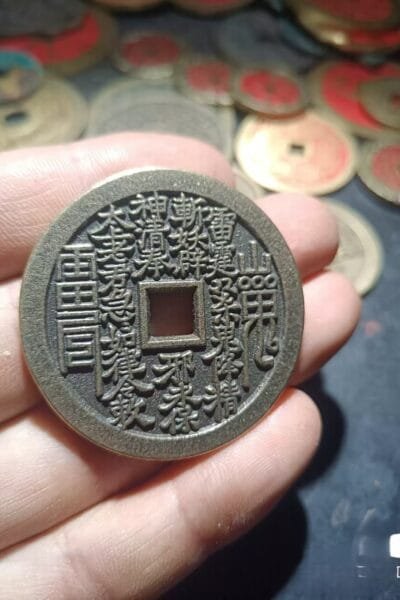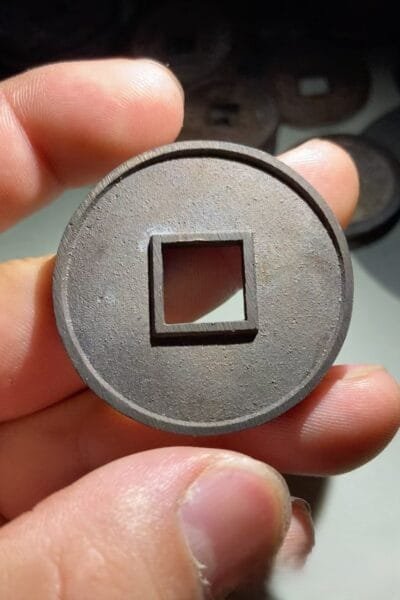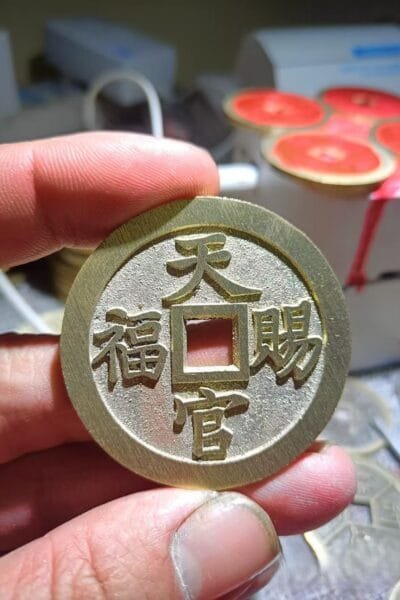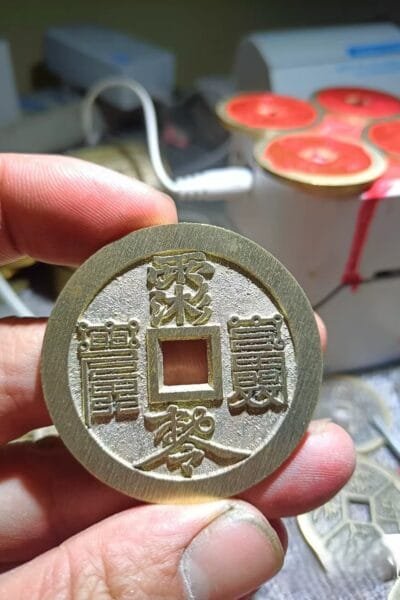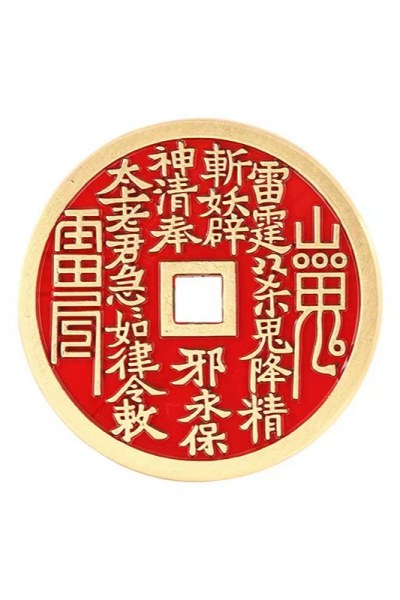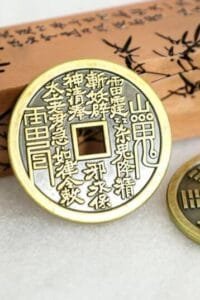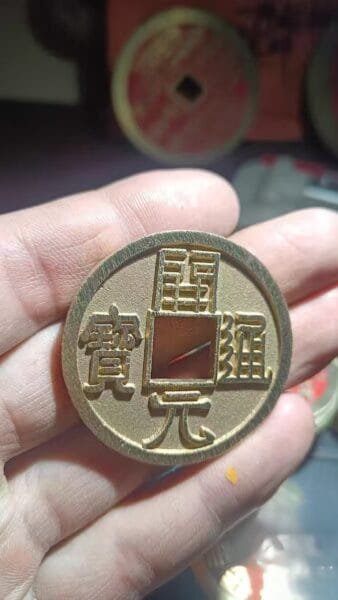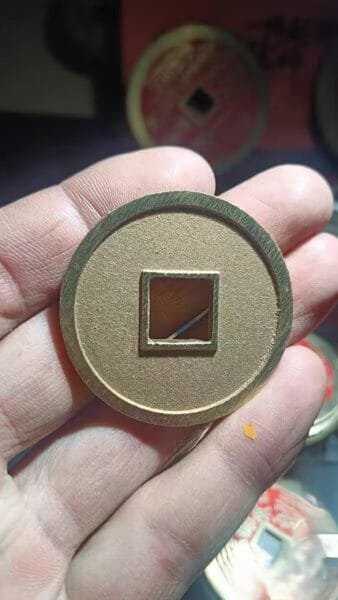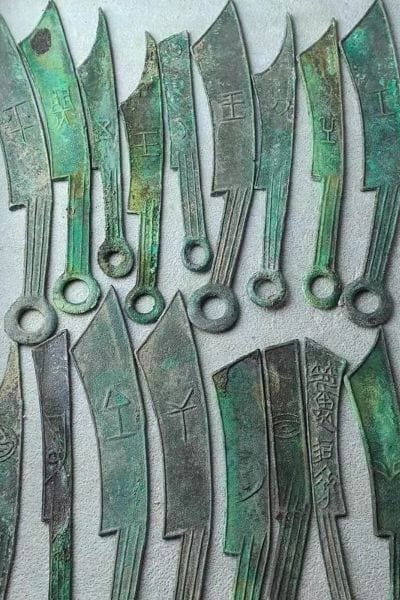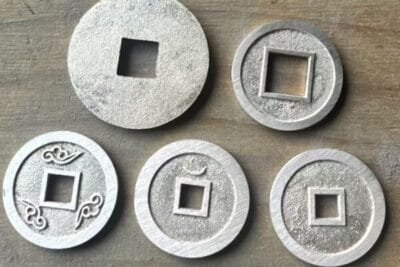
Shan‑Gui Liu Hai Toad Brass Charm Coin
Folk Brass Charm Coin: Shan-Gui Liu Hai Toad Collectible Ornament

 Shan‑Gui Taoist talisman inscription brass charm coin, Chinese folk heritage craft coin                                          d1420144031d44213e42031fb7e79132

Collecting traditional oriental brass handicrafts has grown steadily among vintage collectors and cultural craft lovers worldwide. Many enthusiasts pursue authentic-style replica art pieces that retain old-fashioned craftsmanship and traditional aesthetic features. Unlike ordinary decorative trinkets, high-quality folk brass coins carry unique cultural connotations and practical ornamental value. Among classic dual-sided folk ornaments, the Shan-Gui Liu Hai Toad Charm Coin  stands out for its dual-theme design, fine carving texture and classic ancient coin structure.

In the current handicraft market, many low-quality imitation coins have obvious flaws. Shallow engraving leads to blurred patterns, thin materials cause light weight, and rough polishing results in dull surface texture. These inferior products lose collection value quickly after short-time use. For collectors and craft resellers, choosing standard, solid and well-finished replica brass coins is essential for long-term collection and display.

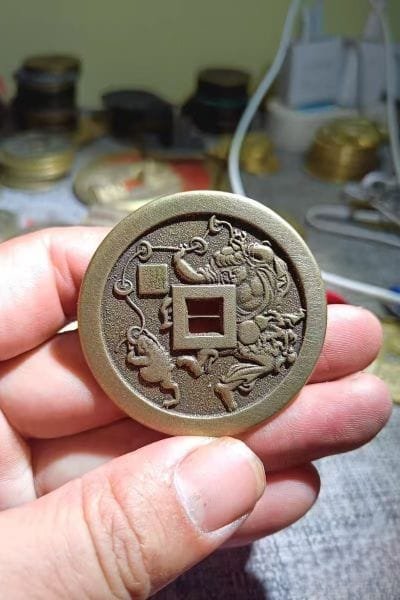
This traditional brass charm coin adopts solid brass raw material and traditional deep carving craft. It features a standard ancient square-hole structure, restoring the shape and proportion of classic folk coins. One side presents traditional folk inscriptions with neat and clear strokes. The reverse side displays the classic Liu Hai and golden toad folklore pattern, a well-known traditional cultural motif representing auspicious meanings. The overall antique finishing is natural and steady, without exaggerated artificial old-making traces, suitable for long-term preservation and display.

 Practical Application Scenarios of Traditional Dual-Sided Brass Ornaments

Traditional folk brass ornaments are widely used in personal collection, home vintage decoration and cultural gift scenarios. For individual collectors, themed brass coin collections are an important part of oriental folk craft collection. This dual-design ornament enriches collection diversity due to its two completely different cultural themes on one single piece. Its standard size and stable texture make it easy to store, arrange and display in display cabinets.

For home decoration lovers, vintage brass accessories can effectively improve the texture of traditional-style rooms. Placing this brass ornament on study desks, antique shelves or tea tables creates a strong traditional cultural atmosphere. Compared with mass-produced modern decorations, hand-restored folk craft pieces have unique retro charm and will not appear monotonous or common.

In addition, it is a high-quality cultural gift option. For friends who love traditional culture, folk crafts and vintage collections, this solid brass coin is practical, exquisite and meaningful. Bulk buyers and craft store merchants can browse our Shop Page to view more traditional brass heritage ornaments for wholesale and matching purchase.

Craft and Quality Advantages of Replica Folk Brass Coins

The quality difference of folk brass coins mainly lies in material density, engraving depth and surface processing. Many cheap imitations use mixed alloy materials, resulting in uneven color and insufficient weight. In contrast, this ornament is made of pure solid brass, with uniform color, delicate metallic luster and standard weight of 30.0g and diameter of 44.96mm.

In terms of craftsmanship, deep relief carving is adopted for both sides. All lines, characters and pattern outlines are clear and three-dimensional, without broken lines or blurry edges. The surface is finely polished many times, smooth to touch without burrs. The vintage antique treatment restores the natural texture of old folk coins, retaining traditional craft features while ensuring the durability of daily viewing and placement.

Different from disposable decorative accessories, heritage-style brass crafts have stable physical properties, not easy to fade or oxidize in normal indoor environment. It can be preserved for a long time, which is why more and more vintage collectors choose standardized handmade replica folk coins.

Purchase and Custom Support for Heritage Brass Crafts

Whether for personal collection, home decoration or commercial bulk sales, stable product quality and complete after-sales support are very important. We adhere to traditional heritage craft production standards for all brass coin ornaments, strictly controlling size, weight, carving details and surface finishing to ensure consistent quality of each batch of products.

We support retail purchase for individual users and bulk wholesale for craft merchants and resellers. For customers with personalized needs such as batch customization and style matching, you can contact us through the Contact Page  to submit detailed demand information. Our professional craft team will provide targeted service and technical support for heritage ornament projects.

FAQ

Q1: Is this Shan-Gui Liu Hai Toad coin a real ancient coin?

A: This is a high-standard handmade heritage replica brass ornament, not an ancient cultural relic. It restores traditional folk craft and pattern design for collection, decoration and gift use.

Q2: Will the brass surface fade or oxidize easily?

A: With fine antique surface treatment and pure brass material, it has good oxidation resistance in indoor dry environment. Daily normal placement will not cause obvious fading or discoloration.

Q3: What are the specifications of this ornament?

A: The coin diameter is 44.96mm, weight is 30.0g, made of solid brass, with dual-sided classic folk patterns and standard square-hole ancient coin structure.

Q4: Do you support bulk wholesale and customized service?

A: Yes. We provide stable stock supply for conventional styles and support batch wholesale cooperation. You can contact us through the official contact page for bulk price and custom solutions.
Elementor #2235

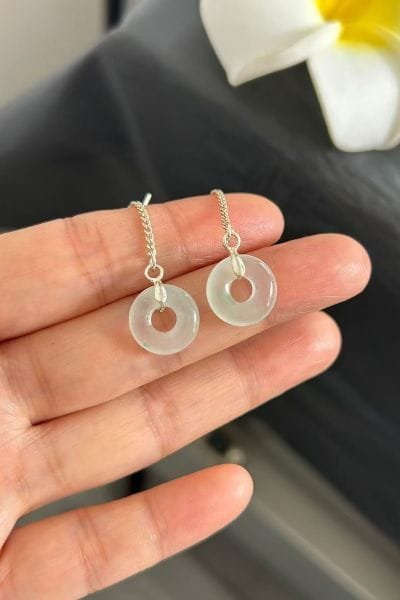
Geometric African Jade Earrings: Oriental Handcrafted Vintage Jewelry

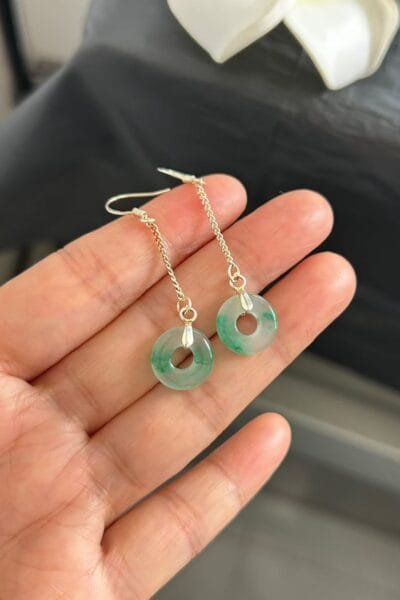
African green jade drop earrings with silver hooks, polished craft jade daily decorative earrings

1. The Unique Charm of Natural African Jade in Oriental Handmade Jewelry

Natural African jade has gradually become a core raw material for retro oriental handmade ornaments favored by global jewelry collectors, gift merchants, and vintage style lovers. Formed through millions of years of geological evolution deep underground, natural African jade possesses rich layered emerald green tones, delicate natural stone grain, moderate hardness and outstanding wear resistance, which perfectly meets the high requirements of fine carving, precise grinding, high-gloss polishing and jewelry assembly. Many mass-produced fashion jewelry adopts synthetic resin or dyed artificial stone to reduce costs, while our geometric African jade drop earrings stick to 100% natural African jade raw materials from screened origin batches.

Every piece of jade blank will go through strict manual screening before formal processing: eliminate raw stones with cracks, dark spots and uneven color, only retain materials with smooth texture and uniform green luster for geometric earring production. Minimalist geometric shapes including round, square, regular hexagon, trapezoid and asymmetrical polygonal outlines are designed to combine modern minimalist fashion with traditional oriental jade culture aesthetics. If you want to browse the full series of handmade jade ornaments and retro crafts we launched, you can visit our official Shop page to view complete product displays, real shot details and bulk purchasing policy.

For daily wear accessories, hypoallergenic performance is always a key concern for most consumers. We equip all African jade geometric earrings with S925 sterling silver ear hooks that pass international skin safety testing, nickel-free, lead-free and non-irritating, greatly reducing redness, itching and allergic problems for sensitive earlobes during long-time daily wearing. The silver accessories adopt anti-oxidation electroplating technology to slow down oxidation and darkening caused by sweat and air contact, extending the service life of each pair of handmade jade earrings. Natural jade’s subtle color difference makes every finished earring pair exclusive to some extent, no two identical jade textures exist, which is exactly the unique collection value of natural handcrafted jewelry compared with industrial mass products.

2. Minimalist Geometric Design: Wide Matching Scenarios for Jade Earrings

The core design logic of our African jade earrings lies in the perfect integration of minimalist geometric modeling and oriental retro charm. Too complicated carved patterns will cover the natural beauty of jade itself, while clean geometric lines can highlight the moist luster and natural grain of African jade to the maximum extent. Small-sized circular geometric jade earrings belong to low-key daily basic style, suitable for office commuting, daily shopping, school and other casual scenarios, adding subtle elegant temperament without being exaggerated. Medium square and hexagonal jade drop earrings are the most versatile style, matching traditional cheongsam, Hanfu, daily casual knitted sweaters, linen retro shirts and light formal dresses perfectly. Large asymmetrical polygonal jade earrings become eye-catching highlight accessories for banquet attendance, party gatherings, cultural events and holiday dating.

In recent years, oriental retro style has swept global fashion circles, more overseas consumers tend to choose cultural connotation jewelry instead of fast fashion disposable accessories. African jade, as a green gemstone with oriental symbolic meaning, stands for peace, good fortune, vitality and stable energy in traditional Chinese jade culture. Wearing geometric jade earrings is not only a simple dressing match, but also a way to carry oriental traditional craft culture into modern daily life. All specifications, size parameters, real wearing effect pictures and wholesale discount rules of this series are displayed in detail on our dedicated Geometric African Jade Earrings . Individual retail buyers and bulk wholesale dealers can check all detailed information on this exclusive page directly.

For jewelry store owners, gift shop operators, online vintage jewelry sellers and cross-border craft resellers, handmade natural jade ornaments have obvious profit advantages and differentiated competitiveness in the market. Homogeneous alloy fashion jewelry faces fierce price competition, while natural hand-carved jade earrings have unique cultural attributes and natural material value, easier to form stable repeat customer groups and high customer unit price orders. Our team provides standardized product pictures, descriptive copy support and flexible batch delivery plans for long-term cooperative wholesale clients, helping global merchants expand their retro jewelry business steadily.

 3. Complete Handmade Craft Process of African Jade Geometric Earrings

High-quality handcrafted jade jewelry cannot be separated from rigorous layered craftsmanship, and each pair of our geometric African jade earrings goes through more than 12 manual working procedures from raw stone to finished product. The whole workflow includes raw material selection, outline marking, rough cutting, precise geometric shaping, coarse grinding, fine polishing, surface gloss finishing, silver accessory matching, assembly, anti-oxidation treatment, manual quality inspection and finished product packaging. No full-automatic machine molding is adopted in the core carving and polishing links, all geometric radian details are adjusted and polished by experienced craftsmen with more than 8 years of jade processing experience.

In the shaping stage, craftsmen will adjust the radian of geometric edges according to jade texture distribution, avoid sharp edges scratching the skin while ensuring neat geometric outline; in the polishing stage, four grades of abrasive tools are used step by step to create moist matte surface or high-gloss bright surface according to different style positioning. For silver ear hook assembly, we use environmental protection glue and mechanical clamping double fixing process to prevent falling off during daily wearing. Every unqualified product with tiny cracks, uneven polishing or loose accessories will be eliminated in the final manual inspection link to guarantee qualified delivery standard for every customer.

Many global wholesale clients have personalized customization demands for jade size, silver accessory style, packing logo and batch quotation. If you have customized requirements, wholesale price consultation, sample application, order progress inquiry or other business questions, please feel free to reach out via our official Contact Us page. Our professional business team will reply to your message within 24 working hours, provide targeted quotation, sample arrangement and one-to-one service support for your craft jewelry business.

4. Collection Value & Gift-giving Scenarios of Natural African Jade Jewelry

Natural African jade geometric earrings own dual value of daily wearable ornament and cultural collection craftwork, making them ideal choices for personal collection and holiday gift giving. For personal collection lovers, small-lot limited hand-carved jade ornaments will have stable appreciation potential with the consumption upgrading of oriental retro crafts. As holiday gifts, green jade carries auspicious cultural meaning, suitable for birthday gifts, Mother’s Day gifts, Christmas holiday gifts, Chinese New Year souvenirs, anniversary commemorative gifts for family, friends, jewelry lovers and business cooperative partners.

Compared with common perfume, cosmetics and daily necessities, handmade natural jade earrings have longer preservation time and stronger emotional memorial value. Exquisite neutral gift packing can be provided for bulk gift orders, with customizable simple brand outer box printing service to improve overall gift grade. Whether you purchase a single pair for personal daily wear, several pairs as holiday gifts, or large bulk orders for commercial resale, our pricing system sets clear tiered discounts according to order quantity to balance retail experience and wholesale profit space for different types of customers.

5. Daily Maintenance Tips to Prolong Jade Earrings’ Service Life

Natural jade is hard but brittle to strong impact, so daily maintenance determines the long-term luster retention effect of African jade earrings. First, avoid violent collision with hard metal, stone and sharp objects when wearing or storing, prevent tiny hidden cracks on jade surface caused by impact. Second, wipe jade surface with soft dry cotton cloth after wearing each time to remove sweat, grease and cosmetic residue attached on the surface, long-term residue accumulation will affect jade’s natural moist luster. Third, store jade earrings independently in soft jewelry box, avoid long-term close contact with metal ornaments to prevent scratch and metal oxidation staining. Fourth, do not place jade jewelry under high-temperature environment or direct strong sunlight for a long time, excessive temperature difference will cause internal water loss of natural jade and lose moist texture gradually. Following these simple daily maintenance rules can keep your African jade geometric earrings bright and elegant for years.

 6. Frequently Asked Questions (FAQ)

Q1: Is the African jade used in earrings genuine natural stone?

A: All our geometric earrings adopt 100% natural original African jade, no dyeing, no artificial synthesis. Natural stone leads to slight unique grain difference for every pair, which is the exclusive feature of natural handcrafted jewelry.

Q2: Are silver ear hooks safe for sensitive skin?

A: We use international standard S925 sterling silver ear hooks, pass nickel-free and lead-free safety test, suitable for most sensitive earlobes, greatly lowering allergic risks.

Q3: Can I apply for free product samples before bulk wholesale orders?

A: Yes, sample application service is supported. Please submit your sample demand, quantity and address through the Contact Us(联系我们) page, our team will calculate sample cost and shipping fee for you.

Q4: What is the general production cycle for large wholesale orders?

A: Conventional in-stock geometric African jade earrings can be arranged for delivery within 3–5 working days. Customized carved styles need 15–25 working days production period based on order quantity.

Q5: Does the product support return and after-sales service?

A: Damaged products caused by logistics transportation can apply for after-sales proof within 7 days after receipt. Artificial collision damage and personalized customized products do not support unconditional return, detailed after-sales rules are listed on the Shop  page.

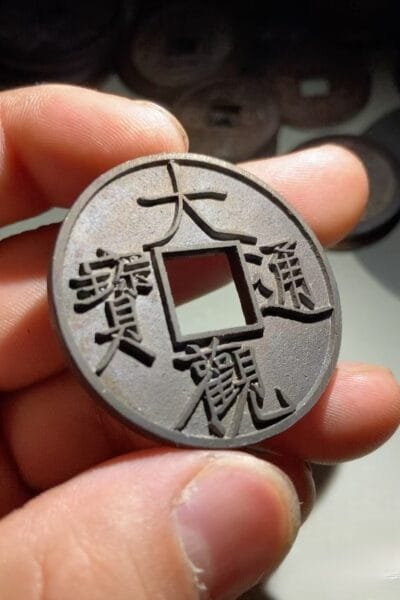
Daguan Tongbao brass replica coin obverse, Northern Song slender gold calligraphy craft

Daguan Tongbao Coin Replica

Daguan Tongbao Antique Chinese Brass Coin Craft Replica

Daguan Tongbao brass replica coin obverse, Northern Song slender gold calligraphy craft                                 020e8bd65b083af238d977663774ab37

Collectible ancient Chinese coins have grown increasingly popular among global antique craft lovers, home decor enthusiasts, and wholesale gift merchants in recent years. Among all imperial coins minted in the Northern Song Dynasty, Daguan Tongbao stands out for its unmatched artistic value, attributed to the unique slender gold calligraphy handwritten by Emperor Huizong of the Song Dynasty. Our high-quality brass Daguan Tongbao replica perfectly restores the shape, font, and retro patina of original ancient coins. It works well for vintage decoration, personal numismatic collection, cultural souvenir gifts, and bulk wholesale business. Before learning the historical background and craft details of this famous coin, you can browse our full range of oriental antique ornaments directly through Shop Page , where all our brass coin crafts are sorted by style, size, and usage for your easy selection.

1. Historical Origin & Art Value of Ancient Daguan Tongbao Coins

The original Daguan Tongbao was officially minted from 1107 to 1110 during the Daguan reign of Emperor Huizong, Northern Song Dynasty. Different from ordinary ancient circulation coins, its four characters “Da Guan Tong Bao” were personally inscribed by the emperor himself, forming the world-famous slender gold calligraphy style. Thin, sharp and powerful strokes create a striking visual effect, which has been praised as the peak of Chinese coin calligraphy art for over 900 years.

Standard ancient Daguan Tongbao coins include multiple specifications: small flat coins, 2-fold, 3-fold, 5-fold, and 10-fold large coins. The 10-fold large version owns the most exquisite casting process, neat coin edge, deep and clear character lines, and natural ancient green rust texture after hundreds of years of burial. Real antique Daguan Tongbao cultural relics are extremely scarce and protected cultural heritage, so genuine ancient coins cannot be used for commercial sales, daily decoration, or bulk gift customization. For most collectors and craft dealers, high-restoration brass replicas become the most practical and legal alternative to own this classic Song Dynasty coin art. If you want to check our exact restoration effect, size parameters, and wholesale price of our finished product, jump straight to our dedicated Daguan Tongbao Product Page  to view high-definition front and back photos, detailed material descriptions, and bulk order rules.

2. Premium Craft & Material of Our Daguan Tongbao Replica

We adopt solid brass raw material and precision sand casting technology to reproduce every detail of the authentic Song Dynasty Daguan Tongbao coin strictly. Our production strictly follows the outer circle, square hole ancient Chinese coin traditional structure, with standard coin diameter, inner hole size, and wall thickness consistent with the unearthed antique samples. Two surface finishing options are available: natural antique green rust aging treatment and primitive brass matte finish, satisfying different decorative and collection demands.

Every piece goes through manual polishing and font trimming to ensure the slender gold calligraphy strokes are sharp, no blurred edges, just like the original imperial coin. All our coin crafts are purely decorative replicas, clearly marked non-antique artwork to meet global cross-border sales compliance requirements. No real cultural relics are involved in our whole product line, which guarantees smooth customs clearance for overseas wholesale orders. Whether you need small-batch samples for personal collection or large-volume bulk orders for gift shop resale, our team supports flexible quantity arrangements and customized surface laser engraving service upon request. To learn more about our brand strength, factory scale, full craft categories, and global wholesale service policy, visit our official website homepage: https://heritagerelicart.com

3. Common Application Scenarios for Daguan Tongbao Coin Crafts

1. Vintage Home & Interior Decoration
The retro Song Dynasty brass coin fits perfectly with oriental style study decoration, antique cabinet display, old house renovation layout, and vintage wall hanging ornaments. Many overseas home DIY bloggers use our Daguan Tongbao replicas as small decorative accessories for wooden furniture, vintage storage boxes, and traditional Chinese style room layout.
2. Personal Numismatic & Oriental Craft Collection
For global ancient coin hobbyists, our high-restoration replica serves as an affordable collection piece to study the charm of Song Dynasty slender gold calligraphy without the high cost and legal risks of real cultural relic coins. Complete front and back texture restoration helps collectors observe the layout characteristics of imperial Song coins closely.
3. Cultural Business Gifts & Wholesale Resale
Craft retailers, cultural travel merchants, and overseas Chinese community organizations love our Daguan Tongbao coins as oriental cultural souvenirs. We provide neutral safe packaging suitable for international logistics, stable stock supply, and tiered wholesale discounts based on order quantity, supporting long-term cooperative resale for global small and medium craft dealers.

4. Advantages of Choosing Our Oriental Brass Coin Wholesale Service

First, we focus only on oriental traditional craft replicas, with rich experience in cross-border e-commerce compliance, packaging, and international shipping arrangement. All product descriptions clearly state replica artwork to avoid customs problems. Second, our factory supports small sample trial orders before large bulk purchases, allowing buyers to confirm texture and quality in advance. Third, we keep updating new antique coin styles regularly, and registered wholesale customers can get priority notification of new product launches and seasonal discount activities through our homepage newsletter subscription. Return to our official website homepage: https://heritagerelicart.com to check our complete company introduction and service overview.

5. Frequently Asked Questions(FAQ)

Q1: Is this Daguan Tongbao product genuine ancient cultural relic coin?

A1: All products sold are handcrafted brass decorative replicas, not unearthed antique cultural relics. We mark replica nature on all product pages to fully comply with international cross-border trade and cultural artifact sales regulations. Full specifications can be checked on our Daguan Tongbao Product Page .

Q2: Can I get bulk wholesale discounted price for large Daguan Tongbao orders?

A2: Yes. Tiered discount prices apply based on order quantity. Full detailed quotation, product spec sheet, and catalog can be downloaded on our Daguan Tongbao Product Page .

Q3: Where can I browse all Chinese ancient coin crafts in your store?

A3: Visit our full craft category collection at Shop Page , where you can filter products by coin dynasty, material, usage, and wholesale suitability easily.

Q4: What logistics solutions do you offer for overseas wholesale orders?

A4: We provide sea freight, air express and economical bulk logistics for different order volumes. Complete shipping cost calculation and delivery timeline details are displayed on our official homepage: https://heritagerelicart.com

African Jade Geometric Handmade Earrings

African Jade Jewelry Wholesale

4238695c8fa3236e25ac7fdb9e317091(1)                                       African green jade drop earrings with silver hooks, polished craft jade daily decorative earrings


Operating offline vintage craft shops, online retro jewelry stores and overseas souvenir wholesale business always relies on distinctive, salable goods to build stable repeat customers. In recent years, natural oriental jade ornaments have grown popular among European, American and Central Asian buyers. Consumers tend to choose low-key natural stone jewelry instead of flashy artificial accessories. As a professional supplier of oriental vintage crafts and natural jade ornaments, we keep two core jade products in long-term stock: daily wearable earrings and matching jade pendants. These two items cover most small trial orders and seasonal bulk purchases, balancing affordable wholesale cost, reliable hand polishing and strong market competitiveness. For new sellers expanding vintage jewelry categories, these ready-stock jade pieces are the most practical choice to start with.

 Bestselling Daily Wear: Natural African Jade Silver Hook Earrings

For daily retro dressing, lightweight, skin-friendly earrings always create the highest turnover in physical jewelry stores. Low-cost alloy ear hooks easily cause ear allergies and oxidation stains, bringing bad shopping experience to end users and extra after-sales troubles for resellers. Our core best-selling jewelry, Natural African Jade Silver Hook Earrings, solves these common problems for global jewelry wholesalers. Every jade bead is polished from genuine natural African jade rough stone. Natural stone carries slight unique color differences for each piece, so no two pairs look exactly the same, avoiding the rigid feel of mass-produced synthetic jewelry. We use smooth round polishing without sharp edges. Even worn all day, these jade earrings will not burden earlobes. The ear hook adopts allergy-resistant silver plating, slowing oxidation effectively. People with sensitive ears can wear them safely daily, greatly expanding customer groups for boutique retail.

We keep standard sizes of these jade earrings in stock all year round. They match linen casual clothes, vintage dresses, office outfits and party wear perfectly, ideal for daily commute, birthday gifts, tourist souvenirs and craft store sales. Knowing new overseas buyers hesitate to place large orders blindly, we support small-batch trial orders for quality check and local market testing. For holiday bulk orders, personalized services like custom gift packaging and slight jade bead size adjustment are available. Compared with high-priced designer jade jewelry, our wholesale price leaves enough profit space for offline shops and online vintage store owners. Thanks to stable quality, our African jade silver hook earrings have become restock favorites for craft merchants worldwide, maintaining steady demand in retro jewelry retail markets all year long.

Matching Series: African Jade Retro Pendant for Jewelry Sets

Single ear jewelry cannot maximize store sales, while complete matched jewelry sets help raise customer spending and enrich product lines. Most buyers of our jade earrings will also add retro jade pendants to form gift packages. Vintage craft business values natural texture and oriental retro charm more than exaggerated appearance. Stable quality and unified style decide long-term cooperation with overseas dealers. Our classic matching product, African Jade Retro Pendant, uses the same natural African jade material and fine hand polishing standard as our earrings, ensuring consistent texture and style for full jewelry sets. With simple retro outline and lightweight design, this pendant fits daily matching, holiday gifting and craft collection well. All finished jade goods go through strict manual inspection before delivery. Flawed, cracked jade pieces will be eliminated completely to guarantee qualified products for every export order. Eco-friendly recyclable gift packaging is optional, meeting green packaging rules for European and North American cross-border markets.

 Wholesale Cooperation & Custom Service Support

For cross-border vintage jewelry wholesale, steady stock, transparent tiered pricing and timely communication matter more than exaggerated marketing slogans. We stick to spot inventory management and strict pre-delivery quality inspection for all jade ornaments, with standardized packaging and fixed delivery cycle for bulk export orders. Whether you only need dozens of pairs for trial sales or large pre-orders for holiday stocking, our foreign trade team can make exclusive quotation, product combination and shipping plans according to your regional market features and sales needs.

If you need real-time wholesale price lists, detailed jade material parameters, custom gift packaging, combined shipping solutions or long-term exclusive supply cooperation, please feel free to Contact Us anytime. Our team replies promptly on working days and offers professional purchasing suggestions based on years of global vintage craft export experience.

FAQ – Frequently Asked Questions

Q1: Are these African jade jewelry items always in stock?
A: Yes. Both jade silver hook earrings and retro pendants are permanent standard stock products. Regular sizes have sufficient inventory to support fast delivery for small trial orders and large seasonal bulk orders.

Q2: Can we customize packaging and jade details for big orders?
A: Bulk orders support customization, including personalized gift boxes, jade bead size, polishing finish and private logo labels to match local store positioning.

Q3: Do these jade ornaments sell well in overseas vintage markets?
A: Oriental-style natural African jade fits current overseas retro jewelry consumption trends. Low-key appearance suits daily wear and gift-giving, with high turnover for physical craft shops and online vintage stores.

Q4: Can I mix earrings and pendants in one wholesale order?
A: Mixed ordering is fully allowed. You can combine jade earrings, pendants and other vintage crafts to cut overall logistics costs and enrich your store product range.

Dulong Jade: Yunnan’s Secret Gem

Dulong Jade: Yunnan's Secret Gem

Natural African green jade peace buckle pendant chinese retro jewelry for daily wear and hand playing                                         Transparent African Jade peace buckle drop earrings oriental daily jewelry

If you have browsed enough jade listings online, you start to notice a pattern. Most shops carry the same categories. Jadeite bangles from Myanmar. Nephrite carvings from Hetian. The colors blur together after a while. Then occasionally a piece shows up that looks different. The green is brighter, almost glassy. The price is lower than you would expect. The listing calls it Dulong jade. Most people scroll past it because the name is unfamiliar. That is a mistake.

Where Dulong Jade Actually Comes From

Dulong jade comes from the Dulong River valley in Gongshan County, Yunnan Province. This is deep in the Nujiang Lisu Autonomous Prefecture, tucked along the border between China and Myanmar. The Dulong River area was one of the last regions in China to get road access. The Dulong people have lived in these mountains for centuries, cut off from the outside world by terrain that makes modern infrastructure nearly impossible.

The jade itself is a quartzite jade. Its main mineral component is alpha-quartz, making up over 90 percent of the stone. The green color comes from trace amounts of chromium and iron embedded in the crystal structure during formation. In gemological terms, Dulong jade belongs to the aventurine quartz family. It often carries visible pyrite inclusions, tiny gold flecks scattered through the green body, which is one of the easiest ways to tell it apart from jadeite or glass imitations.

On the Mohs hardness scale, Dulong jade sits at 6.5 to 7. That puts it in the same range as jadeite, which also measures 6.5 to 7 according to the Gemological Institute of America. The difference is not about hardness. It is about structure. Jadeite has a fibrous interlocking crystal structure that gives it exceptional toughness. Dulong jade has a granular structure, which means it is hard enough to resist scratching but can be more brittle if struck sharply. For daily wear in pendants or earrings, this makes no practical difference. For a bangle that might hit a doorframe, jadeite has a slight edge.

How to Tell Dulong Jade from Jadeite

Buyers who are new to Dulong jade often worry about confusing it with jadeite. Here is what to look for.

First, check for pyrite inclusions. Natural Dulong jade frequently contains small gold or metallic flecks of pyrite. Jadeite rarely shows this feature. If you see tiny sparkles inside the green stone, that is a good sign you are looking at Dulong jade, not jadeite.

Second, look at the grain structure. Dulong jade has a visible granular texture under magnification. Jadeite has a fibrous, felted structure that looks more like woven fabric under a loupe. The difference is subtle but consistent.

Third, feel the weight. Jadeite has a specific gravity of about 3.3, while Dulong jade sits around 2.6 to 2.8. A same-sized piece of jadeite will feel noticeably heavier in the hand. This is not a precise test, but it helps when comparing pieces side by side.

Why Dulong Jade Is Worth Looking At

The case for Dulong jade is not that it is better than jadeite. It is not. Jadeite has centuries of cultural prestige and a more refined toughness. The case is that Dulong jade offers a combination of color, character, and value that jadeite cannot match at the same price point.

A high-quality Dulong jade pendant with vivid green color and good translucency might cost 80 to 200 dollars from a source supplier. A jadeite piece of similar visual quality would easily run three to five times that amount. For someone who wants the look of fine green jade without the investment grade price tag, Dulong jade fills that gap.

There is also the matter of supply. Mining in the Dulong River area is restricted by ecological protection policies. Annual output is limited, and high-grade material with strong color and translucency is a small fraction of that output. This scarcity does not guarantee future appreciation, but it does mean the supply is not elastic. New material does not flood the market when demand spikes.

What to Check Before You Buy

If you are shopping for Dulong jade for the first time, here are the things that matter.

Look for translucency. Hold the piece up to a light source. Better quality Dulong jade will let light pass through the edges, showing a glow from within. Opaque pieces are cheaper but lack the visual depth that makes the stone appealing.

Check for certifications. A legitimate seller should provide a gemological certificate from a recognized testing facility. The certificate should identify the stone as natural quartzite jade, with no evidence of dye treatment or resin impregnation. If a seller cannot provide certification, treat the listing with caution regardless of how attractive the photos look.

Examine the color. Natural Dulong jade green has a slightly cool tone, sometimes described as blue-green or gray-green, compared to the warmer green of fine jadeite. If the green looks too saturated, too uniform, or too bright, it may be dyed. Natural stone always has some variation and subtle color shifts across the surface.

If you are looking for a specific piece, our Dulong jade pendant  selection includes hand-carved pendants sourced directly from Yunnan, each with a gemological certificate and origin documentation.

Caring for Dulong Jade

Dulong jade is low maintenance. Wipe it with a soft, dry cloth after wearing. Avoid exposing it to harsh chemicals, including household cleaners and perfume. Store it separately from harder stones like diamond or sapphire to prevent scratching. The pyrite inclusions are stable and will not oxidize under normal conditions, but prolonged exposure to moisture can dull the surface over time.

Unlike jadeite, which some owners periodically oil to enhance its luster, Dulong jade does not benefit from oiling. Its glassy luster comes from the quartz crystal structure and polishing, not from surface treatments. A simple wipe is all it needs.

 Conclusion

Dulong jade is not a substitute for jadeite. It is its own stone with its own character. The granular quartz structure gives it a brighter, glassier appearance than jadeite. The pyrite inclusions add a unique visual signature. The price makes it accessible to people who want genuine green jade jewelry without spending thousands. And the limited supply from a protected mining region means the material is not something you will find in every mall jewelry store.

If you are curious about what is available, you can browse the full  Heritage Craft collection to see current pieces with natural light photos and origin details. Each listing includes material specifications and certification information.

For questions about sourcing, custom orders, or wholesale inquiries, feel free to contact us  → . We work directly with carvers and suppliers in Yunnan and can help you find the right piece for your needs.

 FAQ

Q: Is Dulong jade the same as African jade?
They share the same mineral composition. Both are quartzite jade with chromium and iron coloring. African jade is mined in the Barberton Mountains of South Africa, while Dulong jade comes from Yunnan. The material is essentially the same, but the Yunnan source carries cultural significance tied to the Dulong people.

Q: Will Dulong jade scratch easily?
No. With a Mohs hardness of 6.5 to 7, it is harder than most common materials it would encounter in daily wear, including steel. It will not scratch from normal handling. It can be scratched by harder stones like topaz or corundum, so store it separately from those.

Q: Can Dulong jade be shipped internationally?
Yes. Dulong jade is classified as quartzite jade, which is not subject to the same export restrictions as Burmese jadeite. It can be shipped to most international destinations without special permits.

Tian Guan Ci Fu Brass Coin Replica

Chinese Lucky Coin: The Story Behind Tian Guan Ci Fu

Vintage Chinese brass blessing plaque replica                                      Back side of Chinese brass blessing plaque, engraved with classic ancient folk script, retro cultural craft replica     

Among the many treasures of Eastern traditional craft, have you ever come across a brass coin engraved with the characters “Tian Guan Ci Fu”? This is not an ancient currency once used for daily trade. It is a type of folk craft known as “Hua Qian” — a charm coin that carries centuries of Eastern auspicious culture and heartfelt blessings. Today, we dive into this unique cultural artifact and explore the traditional casting techniques behind it.

If you are looking to add one to your collection, our hand-cast blessing brass coin is a fine example of this tradition.

The Visual Language of Eastern Auspicious Culture

“Tian Guan Ci Fu” is one of the most representative auspicious phrases in traditional Chinese festival culture. In folk tradition, it symbolizes a wish for a prosperous and happy life, often used during Spring Festival, housewarming celebrations, and business openings.

The reverse side of these charm coins frequently bears the characters “Chi Ling,” which originally referred to official imperial decrees in ancient China, symbolizing authority and solemnity. When these characters were cast onto a coin, they transcended their original practical function and became a decorative motif full of gravitas.

This combination of auspicious text and traditional patterns vividly embodies the Eastern aesthetic principle: “Every image has meaning, and every meaning is auspicious.”

The Craft of Traditional Sand Casting

Unlike modern machine-stamped coins, these folk charm coins are typically made from solid brass using the traditional sand casting method. Sand casting is a craft of remarkable skill — artisans hand-carve the mold, then pour molten brass into the sand cavity.

This fully manual process gives each charm coin its own unique character. If you look closely, you will notice that hand-cast coins have deep, sharp character engravings, natural edge curves, and subtle variations in surface detail. This warmth of handcraft is something cold, standardized machine production can never replicate. For craft enthusiasts, this preservation of traditional technique is the core appeal.

To explore more hand-cast pieces, browse our full 【Heritage Craft collection】.

Product Specifications

– Material: Solid brass
– Process: Traditional sand casting, hand-finished
– Inscription: Tian Guan Ci Fu (obverse) / Chi Ling (reverse)
– Finish: Natural aged patina, warm brass tone
– Marking: Each piece is marked COPY to indicate it is a hand-crafted reproduction, not an antique
– Category: Coin Gift and DIY Kits

Note: This is a decorative craft item, not a circulated currency. The COPY mark complies with international reproduction labeling standards.

Home Decor and Cultural Gifting

With its deep cultural roots and rustic artistic beauty, the Tian Guan Ci Fu charm coin finds new life in modern settings. It makes an elegant wall decoration for Chinese-style interiors, a cultural desk piece for studies and offices, or a meaningful gift for housewarmings and traditional festivals. For collectors who appreciate traditional patterns and handcraft, this type of charm coin is a wonderful piece for display and appreciation.

How to Evaluate a Quality Charm Coin

For those new to this craft, here is how to identify a well-made piece:

1. Check the inscription and pattern depth

A quality charm coin should have deep, clear engravings with flowing strokes and no blurring or merging of characters.

2. Examine the brass tone

Traditional brass should have a warm, natural color. Some pieces receive an aged patina treatment — a good patina transitions evenly and looks authentically aged, not chemically colored.

3. Look for craft traces

Because sand casting is used, the surface may retain faint sand marks or hand-polishing traces. These are proof of traditional craftsmanship. Avoid pieces that are suspiciously smooth with obvious machine-stamping marks.

Bring Home a Piece of Eastern Tradition

The Tian Guan Ci Fu charm coin is more than a brass craft — it is a window into Eastern folk culture and traditional casting techniques. It transcends its coin-like form to become a cultural bridge between past and present.

If you are drawn to the beauty of Eastern aesthetics and traditional handcraft, take a closer look at our auspicious brass charm coin and start your collection today.

Every piece is hand-cast, individually finished, and marked COPY as a reproduction craft. No two are exactly alike — that is the beauty of traditional sand casting.

Q&A Section (Append at the end of the article)

Q1: Is this Tian Guan Ci Fu brass token an ancient antique?
A: All of our brass ornaments are modern cultural replicas made by traditional sand casting techniques. They are not genuine ancient artifacts, suitable for daily decoration and cultural collection.

Q2: Can I carry this brass charm with me daily?
A: Yes. It is compact and lightweight. You can attach it to your keychain for daily carry, or hang it on doors and place it on desks as home decor.


 Vintage silver filigree ring with light green jade cabochon 

Shan Gui Coin

Shan Gui Coin

auto draft                                                     Vintage silver filigree ring with light green jade cabochon 

When it comes to traditional Chinese brass decor and vintage-style accessories, the Shan Gui coin replica is one of the most well-known styles among craft enthusiasts around the world.

To avoid any misunderstanding, we want to state this clearly at the beginning: all the pieces we offer are 100% modern handcrafted replicas. They are newly made artworks based on classic traditional patterns, not ancient artifacts, old antiques, or circulated ancient coins. Rooted in traditional Chinese folk culture and classic carving styles, these brass replicas feature neat lines, balanced proportions, and a calm vintage texture. For anyone who loves oriental retro style, these pieces are great choices for daily wear, home decoration, and personal craft collection.

Folk Culture and Design Meaning Behind Shan Gui Coin Replicas

Many new collectors feel confused about the design and cultural meaning of the Shan Gui coin. In fact, its overall design comes from traditional folk custom, focusing entirely on positive aesthetic concepts and traditional pattern inheritance.

The front side features classic inscribed characters, while the back is engraved with traditional Bagua patterns. This classic matching design records the unique aesthetic and cultural views of traditional Chinese folk craftsmanship. In ancient times, similar copper ornaments were widely used in ordinary families as decorative accessories with good symbolic meaning.

Keeping the classic “round shape with square hole” structure, our replicas fully follow traditional specifications. Every pattern and character is carefully restored by hand. We pursue clean, delicate, and brand-new craft textures instead of artificially aged or worn effects. If you want to view complete styles and different sizes of this classic brass craft, you can check our store collection. We have prepared multiple versions to fit personal collection, interior matching, and custom gift needs.

Craft Features and Daily Use of Handmade Brass Replicas

What truly decides the quality of a Shan Gui coin replica is the brass material and carving precision.

We use high-quality optimized brass as the core material for all finished products. The texture is solid, the color tone is stable, and the material is highly resistant to oxidation and daily wear. Every character groove is carved in uniform depth. The lines are clear and smooth without burrs or distortion. The symmetrical Bagua patterns on the back maintain standard layout, showing rigorous traditional craft aesthetics.

Compared with low-cost rough replicas on the market, our hand-polished versions have richer layered details. The edges are finely trimmed for a smooth and comfortable hand feel, suitable for long-term collection and daily touching.

We divide our products into different styles for different scenarios. Mini lightweight styles are perfect for making vintage pendants and daily matching accessories. Thickened enlarged versions show more delicate carving details, ideal for placing on desks, cabinets, and display shelves to create a pure Chinese retro atmosphere. Standard classic versions are cost-effective and very friendly for beginners who love traditional brass crafts.

These replica brass crafts are highly practical in modern life. Many customers use them as personal accessories, home decorative ornaments, and delicate handmade gifts. If you are looking for finely made, standard and high-quality vintage brass replicas, feel free to browse our full  product range. All items are brand-new handmade works with real detail shots and complete size information for your selection.

Practical Selection and Maintenance Advice for Brass Crafts

Traditional brass decorative replicas do not require complicated maintenance. Simple daily care can keep the texture stable for a long time.

We suggest cleaning your hands before touching the brass surface, to avoid excessive sweat and dirt accumulation. When you do not use the piece for a long time, just wipe it gently with a soft cotton cloth and store it in a dry place. Keep brass crafts away from humid environments and chemical liquids. Do not use hard tools for strong polishing. Slow and natural daily touching will form a gentle and unique metal luster.

For craft lovers who are new to this field, there is no need to blindly pursue old-looking items. Modern high-standard handmade replicas can completely inherit traditional pattern aesthetics. Meanwhile, they have brand-new intact appearance and more approachable prices, which are more suitable for modern daily use and long-term collection.

If you have any questions about style selection, wholesale demand, batch customization, or craft details, you are welcome to  contact us anytime. We focus on the fine reproduction of traditional Chinese folk brass crafts. All products are modern handmade replica artworks. We never sell antique goods or old cultural relics. Our goal is to provide stable, exquisite and compliant oriental vintage crafts for global buyers and collectors.

Traditional craft beauty has always been passed down in modern ways. The Shan Gui coin replica carries classic folk patterns and peaceful traditional cultural meanings. Through precise modern craftsmanship, it perfectly presents the charm of traditional brass art. Whether you are building your own vintage craft collection or looking for unique home decoration pieces, this timeless Chinese brass replica is a worthy choice for every oriental art lover.

Q1: Are these Shan Gui coins genuine old coins or cultural relics?
A: All items we supply are purely modern handmade replicas. They are newly produced crafts imitating classic folk patterns, with no connection to ancient relics or circulated old currency.

Q2: Can I order customized sizes and bulk quantities of these brass replicas?
A: Custom size production and bulk wholesale orders are both available. Send over your specific requirements via our channel, and our team will sort out a suitable plan for you promptly.

Kaiyuan Tongbao Brass Coin Replica

Kaiyuan Tongbao Replica

37b6a1e6477a11fe62cf01beb55a9c0b                                                                        Front and back shot of handmade brass Kaiyuan Tongbao replica coin, vintage brass coin for hand play, home decor, car pendant, garment accessory and DIY craft

The high-priced ancient coins mentioned in this article are museum collections and private cultural relics, which cannot be circulated or sold. Our store only sells hand-copied brass coin crafts for appreciation, retro decoration and collection display, not unearthed cultural relics.

The Origin & History of Tang Dynasty Kaiyuan Tongbao

If you want to browse the full range of antique brass coin ornaments, visit our Shop Homepage  to check more styles. Last week, when sorting out my coin collection, I accidentally found an old Kaiyuan Tongbao coin with a crescent mark. The outer edge of the coin characters was polished into a soft shallow arc after thousands of years of circulation, instantly taking me back to those afternoons wandering antique markets years ago. The shopkeeper laid this ancient coin lightly on cotton padding. The moment my fingertips touched the coin, I could tell it was completely different from mass-produced common coins on the market. Tiny sand traces left by early Tang mints remained deep in the character gaps, a unique texture exclusive to official coins forged a thousand years ago.

Many new collectors hold a misunderstanding that Kaiyuan Tongbao was minted during the Kaiyuan reign of Emperor Xuanzong of Tang, which is totally wrong. These coins were first ordered for unified casting by Emperor Gaozu of Tang in the 4th year of Wude, becoming the first official currency circulated nationwide after the founding of the Tang Dynasty. Wars raged at the end of the Sui Dynasty, and shoddy privately-minted coins flooded the market. Thin inferior coins could even float on water; tens of thousands of poor coins were needed to exchange half a dou of grain, and ordinary people could barely afford the hemp ropes for stringing coins in daily purchases.

Li Yuan completely abolished the Wuzhu coins that had circulated for nearly 800 years. He invited Ouyang Xun, a famous calligrapher, to inscribe the coin characters, set a unified standard of ten coins equal to one liang, and thoroughly sorted out the chaotic currency system that had lasted hundreds of years.

I have collected various versions of Kaiyuan Tongbao over the years. After in-depth research, I realize its real historical value goes far beyond folk legends online, such as “the crescent marks are nail prints of imperial concubines”.

Official Kaiyuan coins cast in the early Tang featured exquisite and neat craftsmanship. The four characters written by Ouyang Xun carry powerful and bold strokes, with a short, crisp first horizontal stroke on the character “Yuan”. The coins feel heavy and solid, each weighing a stable standard of 4 grams. The country enjoyed peace and prosperity during the Zhenguan reign, with very stable commodity prices. Only three to four copper coins were needed for one dou of rice, and a single Kaiyuan Tongbao could exchange for several jin of rice. Such stable livelihood prices formed a prosperous scene hard to replicate in later dynasties.

Classic Versions & Historical Value of Kaiyuan Tongbao

By the mid-Tang Dynasty, mint craftsmen carved star and crescent marks on the reverse side of coins. These were not romantic legends, but exclusive furnace marks of local mints. If coins failed weight or purity checks, the corresponding workshop could be traced and held accountable via the marks. A well-preserved Kaiyuan Tongbao evenly decorated with four crescent patterns on the reverse was auctioned in a small online coin special session before. The complete unworn coin characters made this top-grade ancient coin start at ten thousand yuan. Such high-quality handed-down ancient coins are rarely seen in ordinary offline antique markets.

Huichang Kaiyuan coins from the late Tang carry the most historical research value. During Emperor Wuzong’s Huichang reign, Buddhism suppression policies were implemented. Thousands of temples nationwide were demolished, and Buddha statues, bronze bells and ritual tools were all melted down to mint coins. Meanwhile, each state mint was required to carve local place names on the coin reverse, forming twenty-three place-marked versions in total.

Among them, the version engraved with the character “Yong” on the reverse has the rarest surviving quantity. After years of collection, I have only seen the genuine article separated by display glass in the Shanghai Museum. Fewer than ten intact genuine pieces remain among private collectors, and well-circulated authentic pieces also start at ten thousand yuan at auctions. These coins were cast with casual craftsmanship, featuring slanted and rough characters, yet they serve as physical evidence preserved to this day recording the Buddhism suppression history of the Tang Dynasty.

New collectors often ask me about the core gap between affordable common Kaiyuan replicas and high-priced rare ancient coins.

Handcrafted Kaiyuan Tongbao Replica for Collection & Retro Decor

I always advise beginners not to blindly chase rare unique versions at the start. Instead, get an early Tang replica with clear characters and natural mild patina to experience first-hand. You can clearly touch the layered natural rust permeated into the brass surface over time, which is obviously different from artificially pickled superficial fake rust sold online. Holding the coin, you can feel the unique solid texture of official Tang Dynasty coins.
ChineseBrassCoin 

Never trust cheap “silver Tang Kaiyuan coins” with free shipping online. Real silver ancient Tang coins were only used for royal rewards in ancient times, with extremely low surviving numbers. Intact genuine pieces start at ten thousand yuan, and low-priced bare coins are almost all modern counterfeits.

In the current ancient coin collecting circle, most collectors chase Qing Dynasty coins, pushing up their market prices. Tang and Song copper coins with huge casting scale and rich version systems are instead overlooked. In my opinion, Kaiyuan Tongbao crafts are the most suitable entry choice for new vintage collectors, with affordable ordinary replicas available for only dozens of yuan.

Pinching this brass craft lightly between your fingertips is like touching 300 years of Tang Dynasty time. It reproduces the granaries full of grain during the Zhenguan era, endless Silk Road caravans in the Kaiyuan prosperous age, and the historical moment of melting bronze bells in the Huichang period, traveling across thousands of years to the present.

All Kaiyuan replica crafts in our store refer to genuine coin formats from dozens of senior collectors over months. We adopt ancient sand casting technology to restore the shape at a 1:1 ratio, then conduct fine manual polishing after casting. Every piece has subtle differences in texture and patina details, with no two identical collectibles, suitable for daily appreciation, home retro display and collection.
Contact 

The joy of collecting ancient coin crafts never lies in buying high-priced treasures, but understanding the complete grand history of the prosperous Tang Dynasty through this tiny copper coin in your palm.

Comment Interaction Section

After reading this popular science article about Kaiyuan Tongbao, welcome to share your thoughts in the comment section:

1. Do you prefer neat early Tang Kaiyuan coins or mid-Tang versions with unique furnace crescent marks?
2. When buying ancient coin crafts, do you value historical meaning more, or physical appearance and patina texture?
3. Have you encountered collection pitfalls such as cheap pickled fake rust or fake silver Kaiyuan coins? Feel free to share your experience to avoid traps. 

Spring Warring States Coin Replica Guide

Spring & Warring States Ancient Chinese Coins Guide

Brass Warring States Yan Ming knife coin replica, vintage antique currency craft for collection & home decoration                                         Solid brass Huo Bu coin replica, Xin Dynasty ancient Chinese spade currency craft for collection and vintage home decor 

The Spring and Autumn and Warring States periods marked a crucial turning point in the development of ancient Chinese monetary systems. During this era, the declining authority of the Zhou royal court allowed regional vassal states to independently mint their own metal currencies. This historical shift created a unique multi-currency system across the nation. Boosted by rapid commercial growth and advanced metal casting techniques, regional economies flourished, resulting in diverse coin shapes and overlapping circulation territories throughout ancient China.

Four representative coin types dominated this historical stage: spade coins, knife coins, round ring coins, and Chu ant-nose coins. Each category featured exclusive shapes, regional usage ranges, and cultural origins, fully reflecting the regional characteristics and technological levels of early Chinese civilization.

Spade Coins — The Earliest Farming-Style Ancient Currency

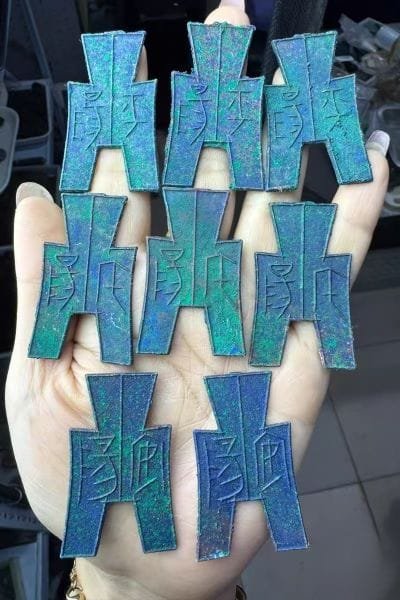
Among all Warring States currencies, Square Foot Spade Coin  stands as one of the earliest standardized metal coins in Chinese history. Evolving directly from the ancient farming tool known as “bo”, or bronze shovel, spade coins first appeared in the early Spring and Autumn period and remained in circulation until the late Warring States era. These coins were primarily used in the Sanjin regions and territories governed by the Zhou royal family.

Spade coins are divided into two main categories: hollow-head spade coins and flat-head spade coins. Early hollow-head versions retained the complete structural features of farming tools, with hollow sockets for wooden handles, making them thick, heavy, and primitive in appearance. As casting technology improved, coins gradually became thinner, flatter, and smaller, evolving into flat-head spade coins that were easier to produce, carry, and trade.

Most flat-head spade coins were inscribed with place names such as Anyi and Jinyang, or weight units including Jin and Zhu. These inscriptions provide valuable historical evidence for studying ancient regional economies and measurement systems. Even during the Wang Mang reign of the Xin Dynasty, ancient-style spade coins were recast in tribute to traditional monetary culture. As typical shovel-shaped bronze currency of the Eastern Zhou Dynasty, spade coins represent the transformation from primitive barter tools to standardized commercial money.

Knife Coins — Military and Hunting Tool-Style Currency

Popular in northeastern ancient China, Yan Ming Knife Coin  developed from bronze cutting tools commonly used for hunting and daily labor during the Shang and Zhou dynasties. Characterized by a circular hole at the handle end and carved grooves on the handle body, knife coins were convenient for stringing, carrying, and large-volume commercial transactions.

This currency system flourished mainly in the State of Qi and the State of Yan, later spreading to Zhao and Zhongshan. Common types include pointed-head knives, round-head knives, arc-backed knives, Qi official knives, and Yan Ming knives. Different structural designs such as straight backs, curved backs, and folded backs distinguish regional versions, clearly showing localized minting characteristics.

Qi knife coins typically carry the character “Hua”, representing standardized monetary units of the Qi region. After Qin unified China, knife coins, shell coins, and spade coins were officially abolished and replaced by a unified national currency. Knife coins reflect the northern nomadic and hunting cultural background of ancient northeastern states and serve as important relics for studying regional commercial exchanges before imperial unification.

Round Ring Coins — The Origin of Traditional Square-Hole Coins

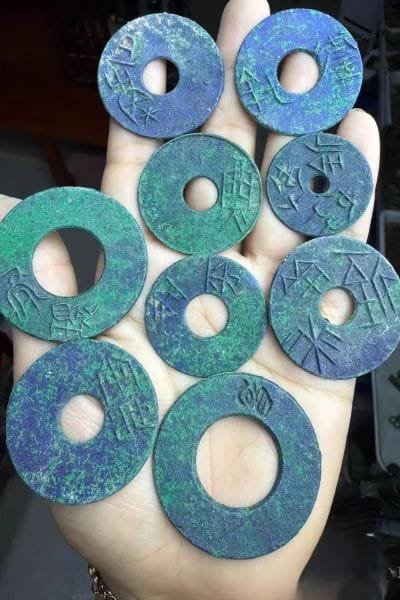
As the prototype of China’s later imperial square-hole coins, Round Ring Coin  emerged as a simpler, more practical currency compared with bulky spade and knife styles. Mainly circulated in the State of Qin and the State of Wei during the mid-to-late Warring States period, ring coins were crafted in circular shapes with central holes, divided into two evolutionary stages: round coins with round holes and early round coins with square holes.

Early ring coins featured narrow central holes, while later versions expanded the hole size for easier stringing and storage. The obverse side was engraved with mint inscriptions and weight marks, while the reverse remained blank. Believed to evolve from ancient spinning wheels or jade ritual bi discs, ring coins symbolized ancient Chinese concepts of “round sky and square earth”.

Thanks to their portable size and unified round shape, ring coins gradually replaced irregular spade and knife currencies, laying the foundational design for the uniform copper coins used throughout China’s feudal dynasties. They represent the progress of ancient Chinese coin design toward standardization, simplicity, and mass circulation.

Chu Ant-Nose Coins — Unique Shell-Style Currency of Southern China

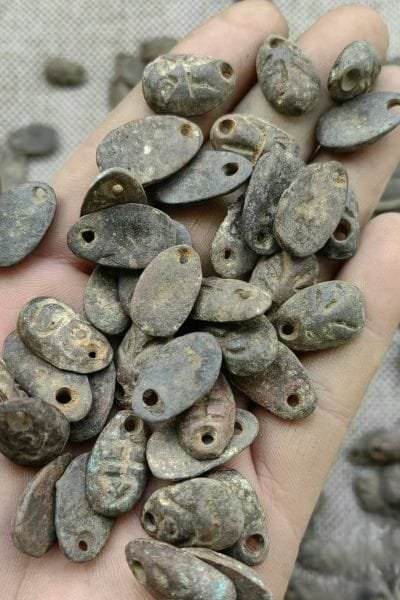
Exclusive to the ancient State of Chu in the Yangtze River basin, Chu Ant Nose Coin is a special bronze currency modeled after primitive shell money. Compared with the advanced tool-derived coins of the Central Plains, Chu’s monetary development was relatively late, retaining the ancient shell-imitating shape for a longer period.

Ant-nose coins feature an oval shell-like appearance with raised obverse surfaces and flat reverse sides, smaller and more delicate than natural shells. Large-scale archaeological discoveries confirm that these coins were widely circulated in Hubei, Hunan, Henan, Jiangsu, and Anhui provinces during the middle and late Warring States periods. A major excavation in Xiaozhuye Lake, Xiaogan, Hubei, unearthed over five thousand well-preserved ant-nose coins, averaging about 4.37 grams each.

Archaeological research shows that ant-nose coins began circulation in the early Warring States period, while the commonly known ghost-face coins became prevalent in the mid-to-late Warring States era. As Chu territory expanded southward and eastward, this unique currency system gradually matured, forming an independent and complete southern monetary culture distinct from the Central Plains coin systems.

Conclusion of Warring States Monetary Culture

The coexistence of spade coins, knife coins, ring coins, and ant-nose coins perfectly demonstrates the diverse regional economies, craftsmanship levels, and cultural customs of the Spring and Autumn and Warring States periods. The evolution from tool-shaped currency to standardized round currency records the entire development process of ancient Chinese monetary standardization.

Today, high-precision solid copper replicas of these four classic Warring States currencies allow cultural enthusiasts and antique collectors to appreciate the artistic details, casting techniques, and historical value of pre-Qin ancient coins, inheriting and displaying precious traditional Chinese metal craft culture.
If you need wholesale supply or custom craft solutions for ancient coin replicas, please contact us to get detailed product catalogs and exclusive bulk pricing

Solid brass Chu State ant nose coin replica, mini vintage ancient bronze currency craft for collection and DIY jewelry making                                        Solid brass round ring coin replica, Warring States circular ancient currency craft for collection & vintage home decor         

Great Five Emperors Coins Replica

Great Five Emperors Coins: 2000 Years of Chinese History & Antique Collectibles

Handmade brass replica Great Five Emperors Coins set, five ancient Chinese coins from Qin, Han, Tang, Song and Ming dynasties, vintage collectible craft for hand play, DIY car pendants and home decoration                             66eb77a1f683ae7b23e97f9dffa38fbe

Great Five Emperors Coins carry more than two  thousand years of  Chinese history, and they are popular antique craft collectibles for hobbyists across the globe.

If you love vintage Eastern artifacts filled with authentic history and traditional Chinese culture, this matched set of five bronze coins will easily catch your attention. They are far more than ordinary old metal coins. Each piece in this complete set originates from a powerful, unified ancient Chinese dynasty, recording key historical milestones and the traditional heaven-earth-human philosophy cherished by ancient people. For hundreds of years, people regard these coins as cultural symbols that stand for peaceful daily life and prosperous civilizations.

In this guide, we will sort out the real historical stories behind every coin in the set, break down their cultural connotations, and explain why handcrafted replica Great Five Emperors Coins are widely loved by antique collectors nowadays. You can check our full hand-cast solid brass replica collection on Great Five Emperors Coins Product Page.

 What Exactly Are Great Five Emperors Coins?

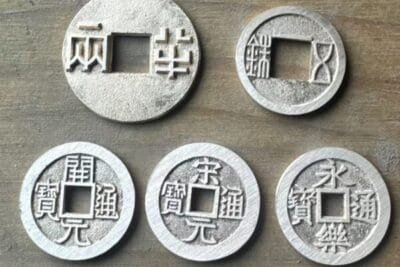
Most collectors are familiar with the Small Five Emperors Coins minted in the Qing Dynasty, while Great Five Emperors Coins come from five separate golden ages of unified dynasties in ancient China. Every coin was produced when its dynasty achieved full unification, stable social order and booming local trade.

 Ban Liang Coin – Qin Dynasty (221–206 BCE)

This is the first standardized currency circulated nationwide in Chinese history, issued after Emperor Qin Shi Huang conquered all warring states. It created the iconic round shape with a square hole design, which became the standard form of Chinese copper coins for the next 2,000 years. The round outer rim symbolizes the sky and the square inner hole represents the earth, fully reflecting the ancient Chinese cosmic thought of “the sky is round and the earth is square”.

Wu Zhu Coin – Han Dynasty (118 BCE – 621 CE)

First minted during the reign of Emperor Wu of the Han Dynasty, this coin stayed in circulation for over 700 years, making it the longest-serving currency in ancient China. It was manufactured under strict production standards with unified weight and texture, and has long served as a cultural mark of long-term social stability and steady commercial growth.

 Kai Yuan Tong Bao – Tang Dynasty (621 CE)

The calligraphy on this coin was written by the famous calligrapher Ouyang Xun. It founded the Tong Bao currency system that lasted more than 1,300 years. The phrase “Kai Yuan” means opening a brand-new prosperous era, and this coin fully witnessed the golden age of the Tang Dynasty, featuring peaceful society, thriving culture and prosperous cross-border trade along the Silk Road.

Song Yuan Tong Bao – Song Dynasty (960 CE)

It was the founding coin of the Song Dynasty, an era when China took the global lead in economy, craftsmanship and art. This coin witnessed the birth of the world’s first paper money, mature porcelain making techniques, and flourishing trade networks connecting East Asia with the rest of the world.

H3: Yong Le Tong Bao – Ming Dynasty (1403–1424 CE)

Minted during the reign of Emperor Chengzu of the Ming Dynasty, this coin was made of high-purity copper with exquisite workmanship. It traveled overseas with Zheng He’s seven legendary maritime voyages, and was widely accepted as currency in Southeast Asia, South Asia and the coast of East Africa. It acts as a landmark relic representing ancient international trade, open cultural communication and far-reaching Chinese cultural influence.

 Collecting & Craft Value of Replica Great Five Emperors Coins

Apart from being historical relics for coin study, hand-made brass replica Great Five Emperors Coins have many practical uses. Our replicas are cast with solid brass using traditional sand casting techniques, perfectly restoring the lines and texture of ancient coins. They are great for hand play in daily life and desktop home display.

Lots of DIY craft enthusiasts buy these coins to weave them into car hanging pendants or vintage clothing accessories. They also make distinctive cultural gifts for friends and business partners with profound oriental historical features.

We offer factory wholesale for all types of replica ancient coins. Click Contact Us to get bulk quotation, and visit our Homepage to browse more heritage antique crafts.

1. What is the difference between Great Five Emperors Coins and Small Five Emperors Coins?
All Small Five Emperors Coins were minted in the Qing Dynasty with a shorter history. Great Five Emperors Coins span five major unified dynasties: Qin, Han, Tang, Song and Ming, covering more than 2,000 years of history. They carry richer historical value and offer more choices for collection and DIY craft creation.

2. What can I do with replica Great Five Emperors Coins?
They are suitable for antique coin collection and research, indoor desktop decoration, hand-woven DIY car pendants, vintage clothing accessories, and cultural themed gifts 

购物车