The high-priced ancient coins mentioned in this article are museum collections and private cultural relics, which cannot be circulated or sold. Our store only sells hand-copied brass coin crafts for appreciation, retro decoration and collection display, not unearthed cultural relics.
The Origin & History of Tang Dynasty Kaiyuan Tongbao
If you want to browse the full range of antique brass coin ornaments, visit our Shop Homepage to check more styles. Last week, when sorting out my coin collection, I accidentally found an old Kaiyuan Tongbao coin with a crescent mark. The outer edge of the coin characters was polished into a soft shallow arc after thousands of years of circulation, instantly taking me back to those afternoons wandering antique markets years ago. The shopkeeper laid this ancient coin lightly on cotton padding. The moment my fingertips touched the coin, I could tell it was completely different from mass-produced common coins on the market. Tiny sand traces left by early Tang mints remained deep in the character gaps, a unique texture exclusive to official coins forged a thousand years ago.
Many new collectors hold a misunderstanding that Kaiyuan Tongbao was minted during the Kaiyuan reign of Emperor Xuanzong of Tang, which is totally wrong. These coins were first ordered for unified casting by Emperor Gaozu of Tang in the 4th year of Wude, becoming the first official currency circulated nationwide after the founding of the Tang Dynasty. Wars raged at the end of the Sui Dynasty, and shoddy privately-minted coins flooded the market. Thin inferior coins could even float on water; tens of thousands of poor coins were needed to exchange half a dou of grain, and ordinary people could barely afford the hemp ropes for stringing coins in daily purchases.
Li Yuan completely abolished the Wuzhu coins that had circulated for nearly 800 years. He invited Ouyang Xun, a famous calligrapher, to inscribe the coin characters, set a unified standard of ten coins equal to one liang, and thoroughly sorted out the chaotic currency system that had lasted hundreds of years.
I have collected various versions of Kaiyuan Tongbao over the years. After in-depth research, I realize its real historical value goes far beyond folk legends online, such as “the crescent marks are nail prints of imperial concubines”.
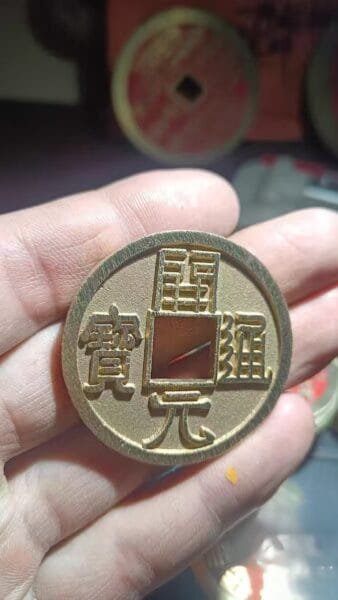
Official Kaiyuan coins cast in the early Tang featured exquisite and neat craftsmanship. The four characters written by Ouyang Xun carry powerful and bold strokes, with a short, crisp first horizontal stroke on the character “Yuan”. The coins feel heavy and solid, each weighing a stable standard of 4 grams. The country enjoyed peace and prosperity during the Zhenguan reign, with very stable commodity prices. Only three to four copper coins were needed for one dou of rice, and a single Kaiyuan Tongbao could exchange for several jin of rice. Such stable livelihood prices formed a prosperous scene hard to replicate in later dynasties.
Classic Versions & Historical Value of Kaiyuan Tongbao
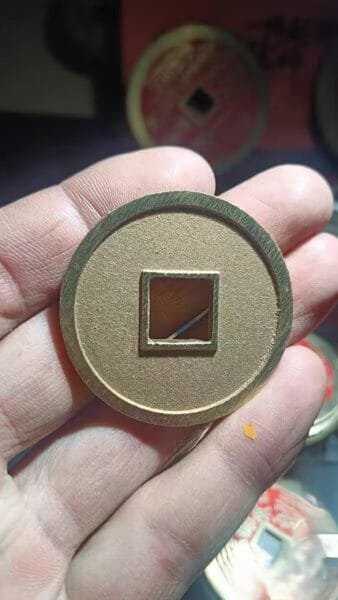
By the mid-Tang Dynasty, mint craftsmen carved star and crescent marks on the reverse side of coins. These were not romantic legends, but exclusive furnace marks of local mints. If coins failed weight or purity checks, the corresponding workshop could be traced and held accountable via the marks. A well-preserved Kaiyuan Tongbao evenly decorated with four crescent patterns on the reverse was auctioned in a small online coin special session before. The complete unworn coin characters made this top-grade ancient coin start at ten thousand yuan. Such high-quality handed-down ancient coins are rarely seen in ordinary offline antique markets.
Huichang Kaiyuan coins from the late Tang carry the most historical research value. During Emperor Wuzong’s Huichang reign, Buddhism suppression policies were implemented. Thousands of temples nationwide were demolished, and Buddha statues, bronze bells and ritual tools were all melted down to mint coins. Meanwhile, each state mint was required to carve local place names on the coin reverse, forming twenty-three place-marked versions in total.
Among them, the version engraved with the character “Yong” on the reverse has the rarest surviving quantity. After years of collection, I have only seen the genuine article separated by display glass in the Shanghai Museum. Fewer than ten intact genuine pieces remain among private collectors, and well-circulated authentic pieces also start at ten thousand yuan at auctions. These coins were cast with casual craftsmanship, featuring slanted and rough characters, yet they serve as physical evidence preserved to this day recording the Buddhism suppression history of the Tang Dynasty.
New collectors often ask me about the core gap between affordable common Kaiyuan replicas and high-priced rare ancient coins.
Handcrafted Kaiyuan Tongbao Replica for Collection & Retro Decor
I always advise beginners not to blindly chase rare unique versions at the start. Instead, get an early Tang replica with clear characters and natural mild patina to experience first-hand. You can clearly touch the layered natural rust permeated into the brass surface over time, which is obviously different from artificially pickled superficial fake rust sold online. Holding the coin, you can feel the unique solid texture of official Tang Dynasty coins.
ChineseBrassCoin
Never trust cheap “silver Tang Kaiyuan coins” with free shipping online. Real silver ancient Tang coins were only used for royal rewards in ancient times, with extremely low surviving numbers. Intact genuine pieces start at ten thousand yuan, and low-priced bare coins are almost all modern counterfeits.
In the current ancient coin collecting circle, most collectors chase Qing Dynasty coins, pushing up their market prices. Tang and Song copper coins with huge casting scale and rich version systems are instead overlooked. In my opinion, Kaiyuan Tongbao crafts are the most suitable entry choice for new vintage collectors, with affordable ordinary replicas available for only dozens of yuan.
Pinching this brass craft lightly between your fingertips is like touching 300 years of Tang Dynasty time. It reproduces the granaries full of grain during the Zhenguan era, endless Silk Road caravans in the Kaiyuan prosperous age, and the historical moment of melting bronze bells in the Huichang period, traveling across thousands of years to the present.
All Kaiyuan replica crafts in our store refer to genuine coin formats from dozens of senior collectors over months. We adopt ancient sand casting technology to restore the shape at a 1:1 ratio, then conduct fine manual polishing after casting. Every piece has subtle differences in texture and patina details, with no two identical collectibles, suitable for daily appreciation, home retro display and collection.
Contact
The joy of collecting ancient coin crafts never lies in buying high-priced treasures, but understanding the complete grand history of the prosperous Tang Dynasty through this tiny copper coin in your palm.
Comment Interaction Section
After reading this popular science article about Kaiyuan Tongbao, welcome to share your thoughts in the comment section:
1. Do you prefer neat early Tang Kaiyuan coins or mid-Tang versions with unique furnace crescent marks?
2. When buying ancient coin crafts, do you value historical meaning more, or physical appearance and patina texture?
3. Have you encountered collection pitfalls such as cheap pickled fake rust or fake silver Kaiyuan coins? Feel free to share your experience to avoid traps.